What Is TR19 and Who Sets It?
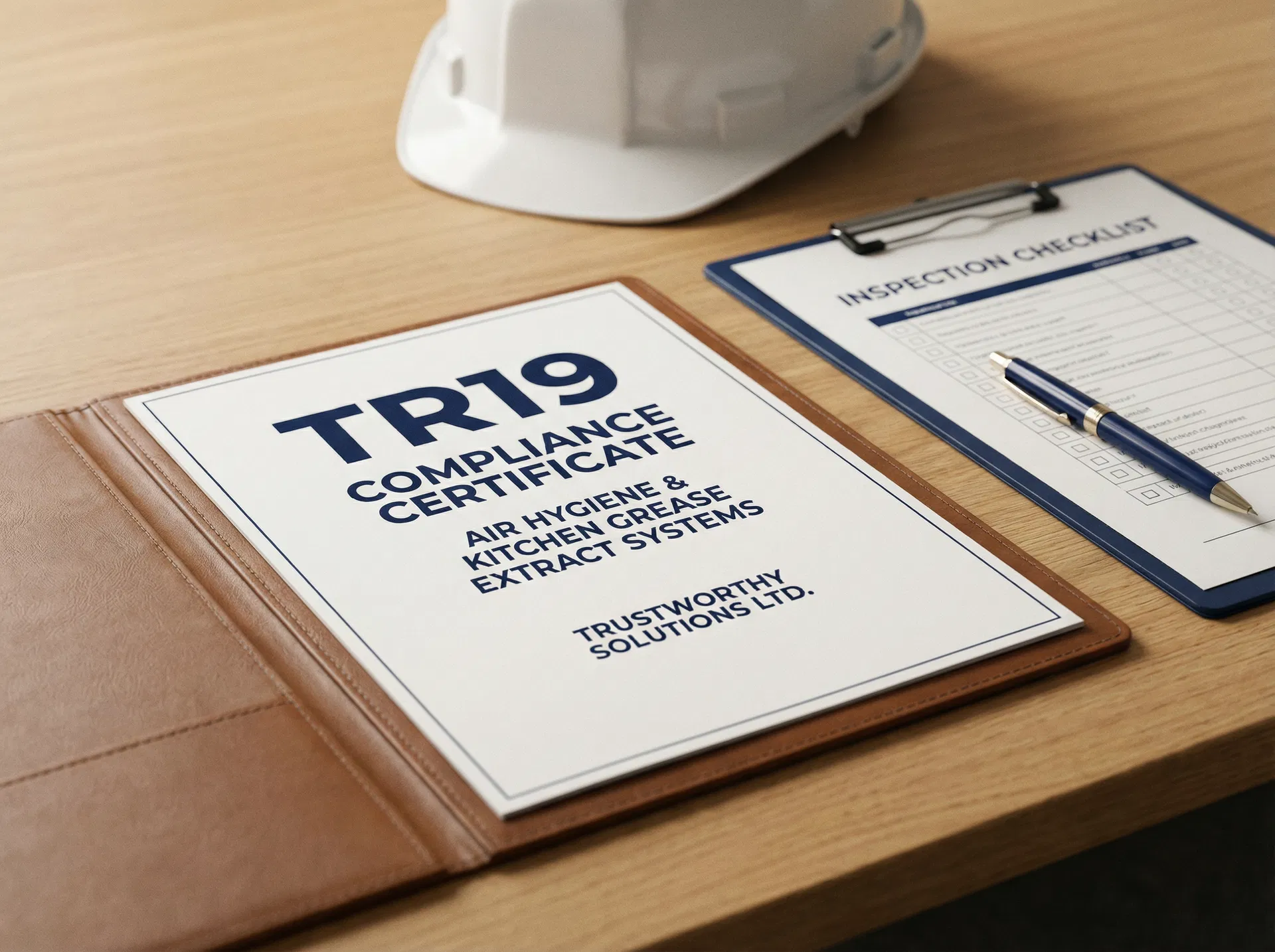
TR19 — formally known as Technical Recommendation 19 — is the industry-standard guidance document published by BESA (the Building Engineering Services Association). It sets out the requirements for inspecting, cleaning, and maintaining commercial kitchen extraction and ventilation systems.
The standard defines acceptable grease deposit levels, prescribes cleaning frequencies based on kitchen usage, and specifies the documentation that must be produced after each clean. It is the benchmark against which insurers, fire risk assessors, Environmental Health Officers, and fire safety authorities measure compliance.
TR19 is not a piece of legislation in itself — but it is the recognised standard for demonstrating compliance with legal duties under the Regulatory Reform (Fire Safety) Order 2005, the Health and Safety at Work Act 1974, the Building Safety Act 2022, and the Food Safety Act 1990.
Courts, insurers, and regulators reference TR19 as the expected standard of care. If an incident occurs and you cannot demonstrate TR19 compliance, proving that you met your duty of care becomes significantly more difficult.
How Grease Buildup Becomes a Fire Hazard
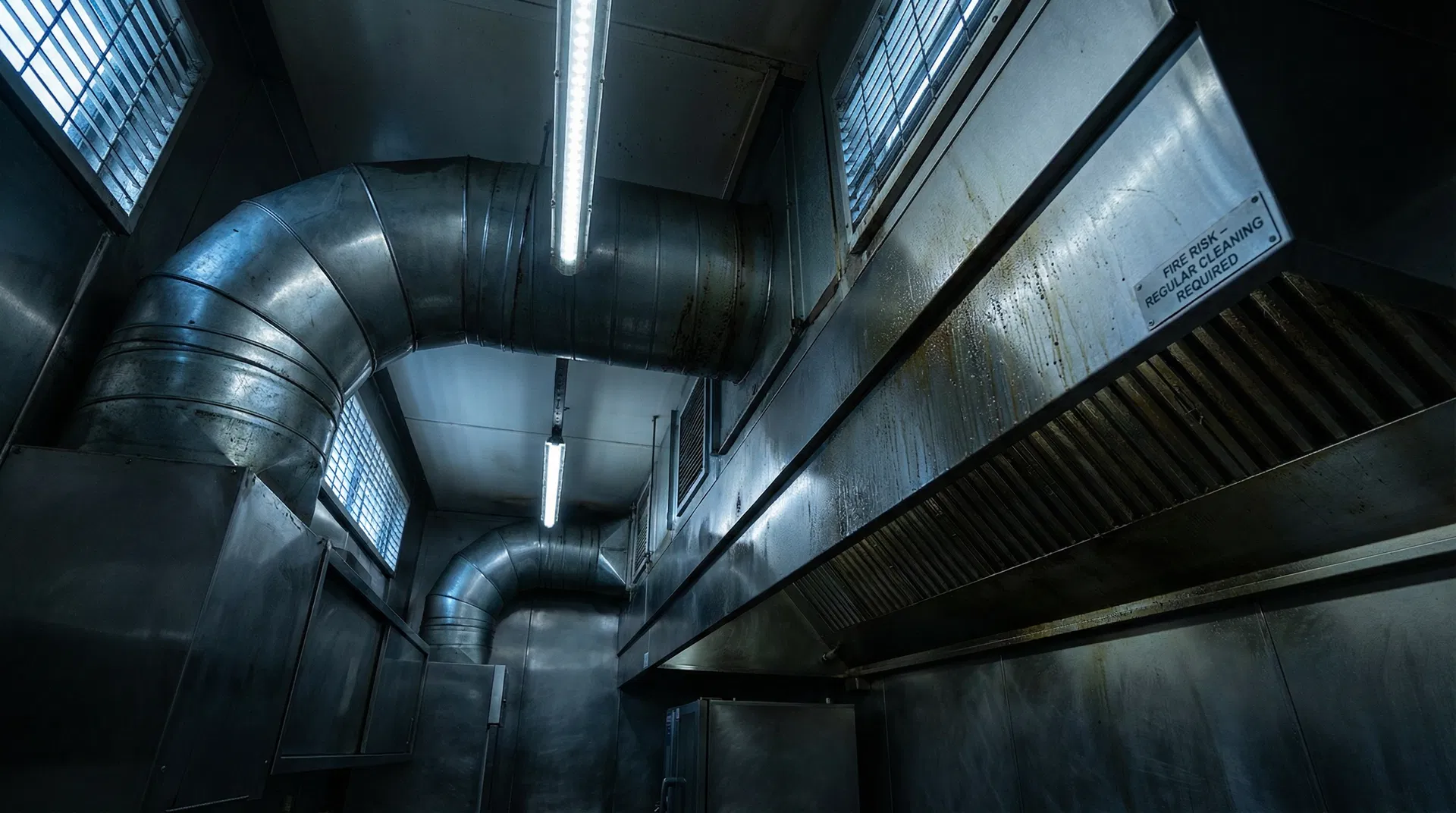
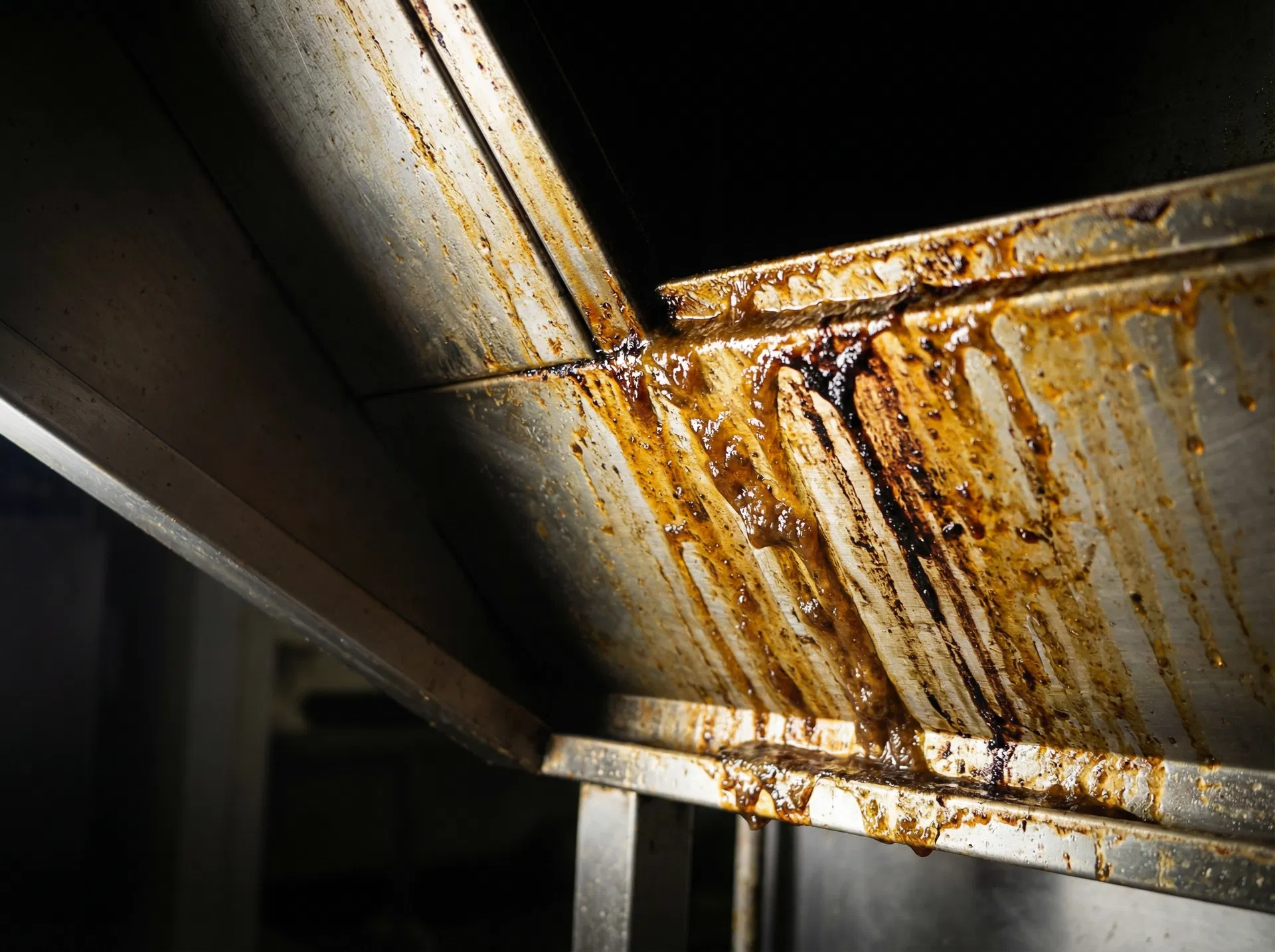
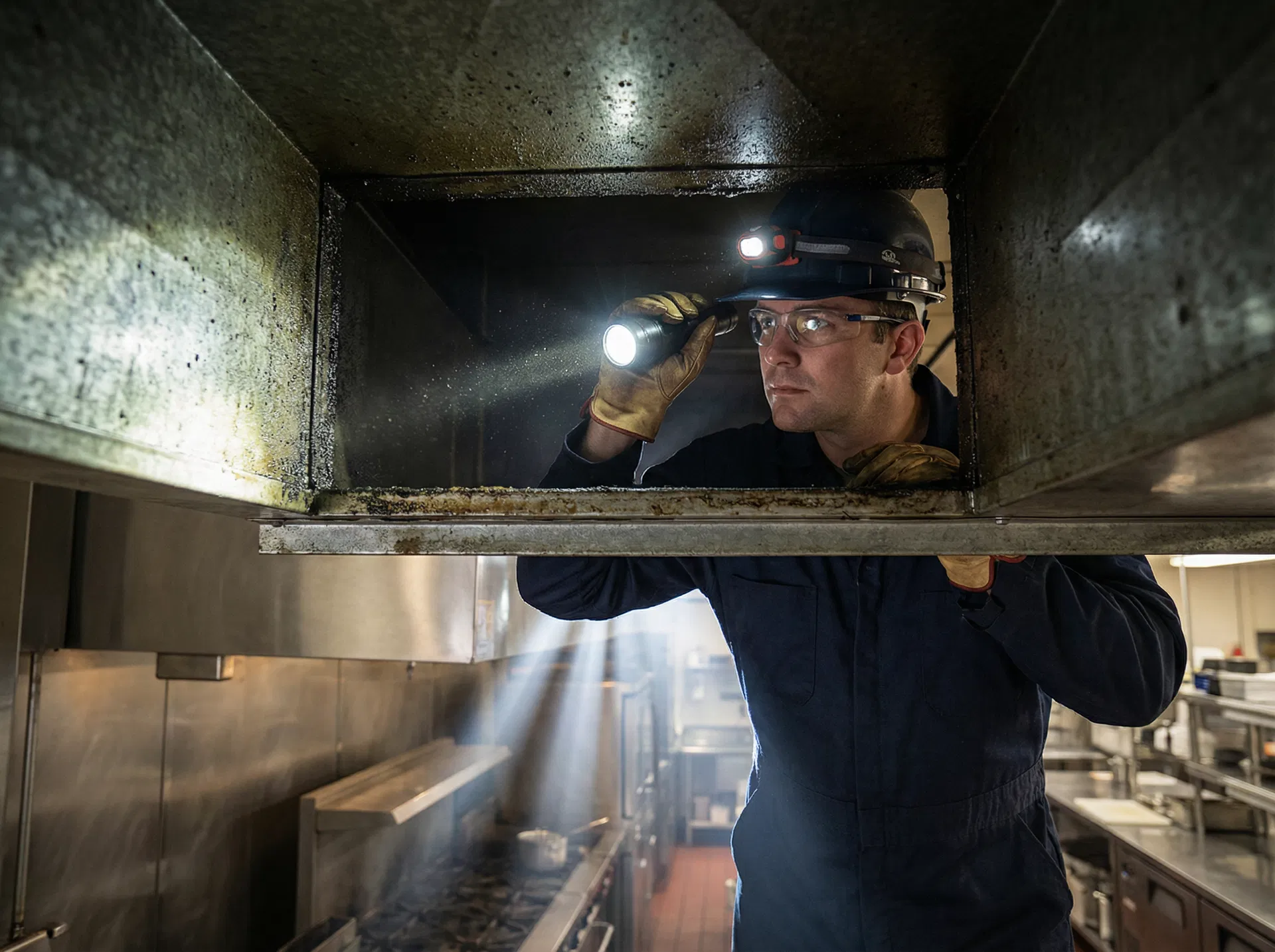
Every time a commercial kitchen operates, cooking vapours rise into the extraction canopy and travel through the ductwork. As these vapours cool, grease condenses and adheres to the internal surfaces of the duct system. Over time, this creates a thick, highly flammable layer throughout the entire extraction network.
A single spark, a flash of flame from the cooking surface, or even the sustained heat of normal cooking operations can ignite this grease. Once alight, a duct fire can travel rapidly through the entire extraction system — often bypassing suppression systems designed only for the cooking area — and spread into the building structure.
UK research indicates that up to 70% of commercial kitchen fires originate in extraction and ventilation systems. The average cost of a kitchen duct fire, including business interruption, commonly exceeds £100,000.
Regular TR19-compliant cleaning removes grease deposits before they reach dangerous levels — and provides documented evidence that you have done so.
The Legal Framework Behind TR19
TR19 is not legislation — but it is the recognised standard for meeting your legal duties. The following Acts and Orders create the legal obligations that TR19 helps you satisfy.
Regulatory Reform (Fire Safety) Order 2005
Places a legal duty on the 'Responsible Person' (typically the business owner or operator) to take general fire precautions. This includes maintaining kitchen extraction systems in a safe condition. TR19 is the recognised standard for demonstrating compliance with this duty.
Health and Safety at Work Act 1974
Requires employers to provide and maintain a safe working environment. Grease-laden extraction ductwork represents a foreseeable fire hazard that employers are legally required to manage and mitigate.
Building Safety Act 2022
Requires building owners and managers to maintain safety records and demonstrate ongoing compliance. TR19 documentation forms part of the auditable compliance trail required under this legislation.
Food Safety Act 1990
Sets cleanliness requirements for food premises. A contaminated or poorly maintained extraction system can compromise food safety standards, potentially leading to enforcement action from Environmental Health Officers.
Important: If an incident occurs and you cannot demonstrate TR19 compliance, courts, insurers, and regulators will assess whether you met your duty of care. The absence of TR19 documentation is routinely cited in enforcement actions and insurance claim disputes. This page provides general information only and does not constitute legal advice. For specific guidance on your obligations, consult a qualified legal professional.
How Often Does Your Kitchen Need a TR19 Clean?
TR19 prescribes minimum cleaning frequencies based on kitchen usage level and cooking methods. These are the minimum intervals — your insurer or fire risk assessor may specify more frequent cleaning.
| Usage Level | Operating Hours | Cooking Methods | Minimum Frequency |
|---|---|---|---|
| Heavy Use | 12–16 hours/day | Wok, charcoal, solid fuel, high-volume frying | Every 3 months |
| Moderate Use | 6–12 hours/day | Mixed methods, standard commercial | Every 6 months |
| Light Use | 2–6 hours/day | Low-grease, steaming, baking, light catering | Every 12 months |
Source: BESA TR19 Grease — Guidance for Commercial Kitchen Extraction Systems. Frequencies shown are minimum recommendations. Individual insurer requirements may vary.
- High-volume restaurants
- Takeaways & fast food
- Hotel kitchens
- Stadium & event catering
- Wok & Asian cuisine
- Pubs & gastropubs
- Café bistros
- Care home kitchens
- School canteens
- Contract catering
- Office staff canteens
- Light-use cafés
- Village halls
- Community centres
- Occasional event kitchens
TR19 and Your Commercial Insurance Policy
Most commercial kitchen insurance policies include a condition requiring the extraction system to be cleaned and maintained to TR19 standard. This is not merely best practice — it is a policy condition. Failure to comply may give an insurer grounds to dispute or reject a claim following a fire.
Insurers may request evidence of TR19 compliance at renewal, following a claim, or during a mid-term policy review. A history of documented, compliant cleaning demonstrates responsible risk management and supports a favourable renewal outcome. Conversely, gaps in cleaning records can lead to increased premiums, additional policy conditions, or difficulty obtaining cover.
BlueTick Extraction Hygiene was founded by a CII (Chartered Insurance Institute) qualified professional who also works alongside Focus Insurance Services, an FCA-regulated commercial insurance brokerage. Our compliance reports are specifically designed to meet underwriter requirements — not just to satisfy a checklist.
What Happens If You Don't Comply with TR19?
Non-compliance with TR19 is not a theoretical risk. The consequences are practical, financial, and in some cases, criminal.
Legal Consequences
- Breach of the Regulatory Reform (Fire Safety) Order 2005
- Enforcement notices from Fire Safety Officers
- Prosecution and potential fines
- Personal liability under the Building Safety Act 2022
- Prohibition orders forcing business closure
Financial Consequences
- Insurance claim denial following a fire
- Increased premiums or refusal of cover at renewal
- Fire damage costs (commonly exceeding £100,000)
- Business interruption losses
- Emergency clean-up and system replacement costs
Operational Consequences
- Forced closure during emergency remediation
- Equipment failures from contamination
- Failed Environmental Health inspections
- Reputational damage to the business
- Loss of food hygiene rating
What a TR19-Compliant Service Report Must Contain
Not all cleaning certificates are equal. A TR19-compliant service report must contain specific evidence to satisfy insurer, fire risk assessor, and regulatory requirements. The following elements are mandatory under the TR19 standard.
The BlueTick Difference
Our reports are reviewed through the lens of an insurance professional — ensuring every data point an underwriter needs is present and correctly documented.